
Table of Contents
- Why Spotting Fake Funko Pops Matters
- Examine the Box Quality and Printing
- How to Tell if a Funko Pop Box is Fake
- Funko Pop Serial Number Check and Imprinted Codes
- Inspect the Vinyl Figure and Paint Details
- Verify Copyright Symbols and Trademark Registration
- Buying Authentic Funko Pops Online
- Use Technical Verification Methods
- Frequently Asked Questions
Last Updated: September 27, 2026
Why Spotting Fake Funko Pops Matters
Counterfeit Funko Pops flood the market every year, and collectors often discover they've purchased fakes only after opening the box or receiving damaged goods. The problem isn't just wasted money, it's the erosion of trust in online marketplaces and the frustration of building a collection with compromised pieces. At Funko Pop Fun Collections, we understand how important authenticity is to serious collectors, which is why learning how to spot fake Funko Pops has become essential knowledge for anyone expanding their display. We offer a curated selection of Funko Pop! figures, Pokémon cards, and exclusive collectibles for fans and enthusiasts across the UK.

The stakes are real. A rare chase variant can cost significantly more than a common release, making it a prime target for counterfeiters who profit from unsuspecting buyers. Beyond the financial hit, fake figures often display obvious quality issues: paint bleeding, misaligned features, and packaging that feels cheap. The good news is that spotting these counterfeits doesn't require expert training, just knowledge of what to look for.
This guide walks you through the most reliable methods to verify authenticity before you buy, from examining box construction to testing physical properties that counterfeiters consistently get wrong.
Examine the Box Quality and Printing
The box is your first line of defence when learning how to spot fake Funko Pops. Counterfeiters often cut corners on packaging because they prioritise the vinyl figure itself, leaving telltale signs in the printing quality and construction.
Font thickness and clarity
Authentic Funko Pop boxes feature sharp, crisp printing with consistent font weight throughout. The text on the front, back, and sides should be perfectly legible with no blurring or inconsistency. Counterfeit boxes frequently display thinner or irregular lettering, particularly on smaller text like copyright information and product codes.
Pay special attention to the Funko logo itself. The official logo maintains exact proportions and line thickness. Counterfeits frequently distort this, making it appear slightly stretched, compressed, or misaligned on the box.
Colour gradients and ink saturation
The colour gradients on authentic Funko Pop boxes transition smoothly and evenly. Backgrounds, character artwork, and decorative elements should display consistent ink saturation with no visible streaking or uneven distribution.
Counterfeit boxes often show poor ink saturation, colours appear either too faded or too dark and muddy. The gradients may look harsh or blocky rather than smooth. This is particularly noticeable on character artwork where subtle shading should create depth and dimension.
How to Tell if a Funko Pop Box is Fake
Beyond printing quality, the overall box construction reveals authenticity. Counterfeiters struggle to replicate the precise engineering that goes into official Funko Pop packaging.
Seam lines and packaging integrity
Examine where the box panels connect. On authentic boxes, seam lines are perfectly aligned, with no gaps or overlapping cardboard. The glue application is minimal and invisible, you shouldn't see dried glue residue or uneven adhesive lines.
Counterfeit boxes frequently display poor seam alignment. Panels may sit slightly askew, creating visible gaps. The cardboard itself might feel thinner or more flexible than genuine boxes, indicating substandard materials.
Glue residue and box dimensions
Check for visible glue residue on the interior and exterior of the box. Authentic Funko Pop boxes use precise glue application with no excess seeping out. Counterfeits often show dried glue beads or cloudy residue where adhesive wasn't properly controlled.
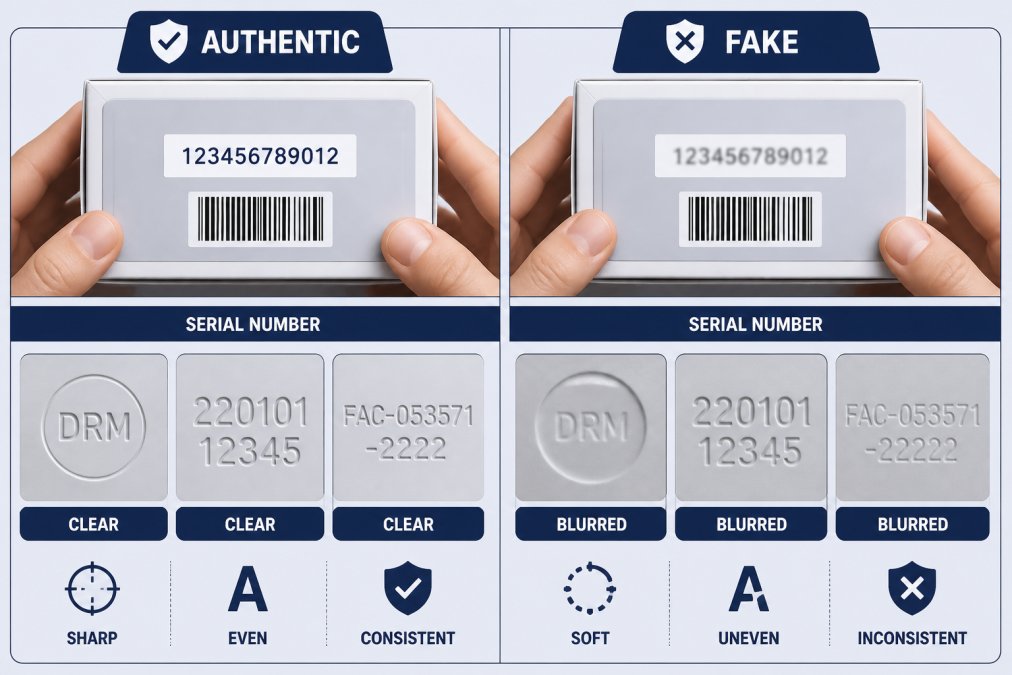
Funko Pop Serial Number Check and Imprinted Codes
Every authentic Funko Pop carries specific identification codes that counterfeiters struggle to replicate accurately. Learning how to verify these codes is critical for spotting fake Funko Pops.
The imprinted code on the bottom of the box should be sharp, clear, and precisely positioned. Counterfeit codes often appear blurry, misaligned, or use incorrect font sizes. The serial number format varies by product line, but it should always follow official Funko numbering conventions.
Inspect the Vinyl Figure and Paint Details
The vinyl figure itself reveals authenticity through paint application quality and mould precision. This is where most counterfeits show obvious defects.
Paint bleeding and mold quality
Authentic Funko Pops display clean, precise paint lines with no bleeding or colour overflow. The paint should stay within defined boundaries, particularly around eyes, mouth, and costume details. Counterfeit figures frequently show paint bleeding where colours seep beyond their intended areas.
Examine the eye placement closely. Genuine figures have eyes positioned symmetrically and proportionally. The pupils should be centred and identical in size. Counterfeits often display misaligned eyes, unequal pupil sizes, or eyes that appear to be looking in different directions.
The overall mould quality matters significantly. Authentic figures have sharp edges and clean details. Counterfeits often display soft or rounded edges, missing details, or inconsistent surface texture.
Eye placement and sharp edges
The sharpness of edges is one of the easiest ways to distinguish authentic from counterfeit Funko Pops. Genuine figures maintain crisp definition throughout, ears, fingers, costume elements, and facial features all display clean, sharp edges.
Counterfeit figures frequently show soft, rounded edges indicating they were manufactured from worn moulds or improper production techniques. This is particularly noticeable on small details like fingers, collar edges, or hat brims.
Funko Pop! Games Baldur's Gate 1187 →
Paint saturation on the figure should be consistent and vibrant. Colours should match the official artwork shown on the box. Counterfeit figures often display faded or overly dark paint, indicating lower-quality pigments or improper curing during manufacturing.
Verify Copyright Symbols and Trademark Registration
Official Funko Pop packaging includes specific copyright and trademark symbols that counterfeiters often omit or misrepresent. These legal markings are surprisingly easy to verify.
The copyright symbol (©) should appear on the back of the box along with the current year and Funko Inc. The trademark symbol (™) should accompany the Funko name throughout the packaging. Counterfeit boxes frequently omit these symbols entirely or display them incorrectly formatted.
Check the licensing information as well. Authentic boxes clearly state which entertainment property the figure represents, Marvel, DC, Disney, etc. The official logo for that property should be present and correctly rendered. Counterfeits sometimes display incorrect or poorly rendered licensing logos.
The manufacturer information on the back should list Funko Inc. and include a valid address. Counterfeit boxes may list incorrect manufacturer details or omit this information entirely. This is a quick verification step that often reveals fakes immediately.
Buying Authentic Funko Pops Online
Where you buy matters as much as what you inspect. Purchasing from reputable sellers significantly reduces the risk of acquiring counterfeits.
Seller reputation and reseller verification
Check seller ratings and reviews before purchasing. Sellers with consistent positive feedback and long trading histories are far less likely to deal in counterfeits. Look for sellers who specialise in collectibles and maintain transparent inventory practices.
Read detailed reviews from other collectors. Buyers often mention if they received authentic figures or suspected fakes. Multiple reports of counterfeit issues are a clear warning sign to avoid that seller.
Ask sellers direct questions about their sourcing. Legitimate retailers can explain where they obtain stock and provide documentation of authenticity. Sellers who are vague about sourcing or refuse to answer questions are potential red flags.
At Funko Pop Fun Collections, we offer a curated selection of Funko Pop! figures, Pokémon cards, and exclusive collectibles for fans and enthusiasts across the UK. We provide the perfect items to build a display you will love.

Price discrepancies and barcode verification
Unusually low prices are often the first indicator of counterfeit stock. If a rare chase variant is selling for significantly less than market rate, investigate why. Legitimate sellers price competitively but not suspiciously low.
Compare prices across multiple authoritative retailers. Significant price variations between sellers warrant investigation. A figure that costs £35 at one retailer but £15 at another suggests potential quality issues.
Check the seller's return policy. Reputable retailers offer returns or exchanges for counterfeit items. Sellers with no-return policies or restrictive return terms are more likely dealing in questionable merchandise.
Use Technical Verification Methods
Beyond visual inspection, several technical methods provide definitive authentication results. These approaches detect counterfeits that might fool casual observation.
Weight and material density testing
Authentic Funko Pops have specific weight ranges that vary by figure size and design.
Blacklight and UV light testing
Learning how to spot fake Funko Pops protects your investment and ensures your collection contains genuine pieces you can display with confidence. The combination of visual inspection, weight testing, and technical verification methods catches counterfeits effectively. When purchasing, prioritise sellers with established reputations and transparent sourcing practices. At Funko Pop Fun Collections, we offer figures like the Funko Pop! Games Baldur's Gate 1187 Jaheira and our Special Offer of the Week, so you can build a collection you will love to display.
Frequently Asked Questions
Do fake Funko Pops have serial numbers?
Counterfeit Funko Pops often have serial numbers, but they differ from authentic ones. Genuine figures display correctly formatted imprinted codes with precise font weight and spacing. Fakes typically show misaligned, blurry, or incorrectly spaced serial numbers. When you spot fake Funko Pops, check the barcode on the back, authentic codes scan properly and match the product database. Counterfeit barcodes may not scan or show incorrect product information.
What are the most common signs of counterfeit Funko Pops?
The most reliable indicators include poor paint bleeding on the vinyl figure, uneven colour gradients on the box, incorrect font thickness on text, misaligned copyright symbols, and low-quality plastic inserts with visible factory defects. Counterfeit boxes often have weak ink saturation, rough seam lines, and glue residue. Check the official logo clarity, fakes blur trademark registration details.
How can I verify authenticity when buying authentic Funko Pops online?
Purchase from reputable resellers with strong seller reputation and verified buyer feedback. Compare the listing price against official pricing, significant discrepancies signal counterfeit stock. Request detailed photos of the box, serial number, and vinyl figure before buying. Inspect the seller's return policy. Avoid unbranded listings or sellers unwilling to provide authentication details.
Can I use blacklight or UV light to test if a Funko Pop is fake?
Yes, blacklight testing reveals authentication details on genuine Funko Pops. Use blacklight as a supplementary check, not the sole authentication method.